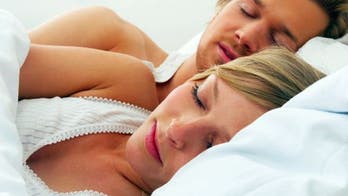
Strange sleep disorder makes people appear 'totally drunk' If you've ever woken from a deep sleep in a confused state and didn't remember the experience later, you may have a condition known as "sleep drunkenness."
Researchers use video game to study how sleep apnea affects memory A team of researchers are using a video game to study the affect sleep apnea has on a person’s memory.
Daylight saving time harms high school students' alertness, study suggests A new study suggests high school students suffer from sleep loss following the change to daylight saving time— a consequence that adversely affects not only their school performance but also their ability to drive, the authors argue.
6 tricks for saving your sleep (and sanity) at the end of daylight saving time It’s true, you can’t run from this. The end of Daylight Saving time is coming on November 1.  Are you ready?
What's the healthiest way to pull an all-nighter? The occasional all-nighter is a necessary evil for many professionals and students trying to meet a tight deadline. Are there any strategies to make that all-night session and recovery easier?
Blue-light blocking glasses may help sleep after screen time The blue glow from televisions and other screens suppresses natural mechanisms that help us fall asleep at night, but blocking just the blue wavelength may restore normal nighttime sleepiness, according to a new study.
Body clock may be to blame when young children fight sleep When youngsters continually struggle to fall asleep at night, new research suggests maybe their body clock doesn't match their bedtime.
Study of our paleo ancestors suggests getting less than 8 hours sleep isn't so bad You've heard of the Paleo diet, but the next big thing in health may well be the Paleo sleep schedule.
Which cities get the most sleep? People in Melbourne sleep the most, people in Tokyo sleep the least, and Americans just need more sleep overall.
Scientists solve a REM-sleep mystery Exactly what your flickering eyes are doing during the rapid-eye-movement phase of sleep has long been a mystery to scientists, but a team that monitored the neurons of volunteers says it has figured it out.