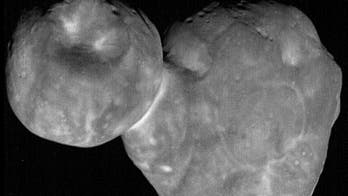
May 20, 2019 NASA finds water, 'organic molecules' on mysterious Ultima Thule Since first encountering the mysterious Ultima Thule, "the farthest world ever explored," earlier this year, NASA has made several discoveries about the ancient space object. Now, researchers from the space agency have made a startling discovery – the presence of water and "organic molecules" on its surface.
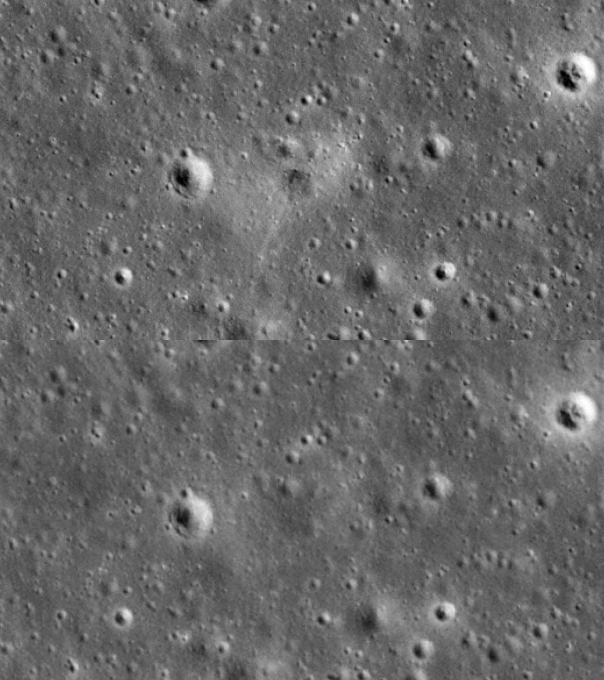
May 20, 2019 Moon crash site found! NASA probe spots grave of Israeli lunar lander A sharp-eyed NASA spacecraft spotted the probable remains of an Israeli spacecraft that crash-landed on the moon last month.
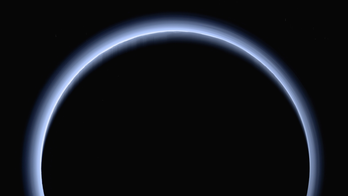
May 20, 2019 Life on Pluto? Ocean, long thought to be frozen could be hidden, study claims An ocean on Pluto long thought to have frozen over could actually just be hidden from view by an insulating cloud of gas, scientists say.
May 20, 2019 Solid, low-mass planets have best chance to survive parent star's death When stars about the sun's size swell into red giants and finally dwindle into white dwarfs, their planets may be kicked out of the system or consumed.
May 17, 2019 NASA creating world's first all-electric airplanes powered by 'holy grail' frozen hydrogen fuel to save Earth from eco-disaster NASA funded scientists are working on an environmentally friendly electric plane that's powered by cryogenically-liquified hydrogen fuel.
May 16, 2019 Israel to put Bible on the moon, Netanyahu says The United States put man on the moon and Israel wants to land the Bible there.
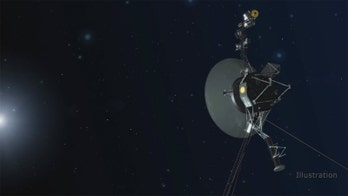
May 16, 2019 NASA's Voyager and Pioneer probes launched decades ago and are still out there. Here's where they'll end up. Spacecraft that launched from Earth in the 1970s are still traveling on trajectories that led them out of our solar system and beyond.
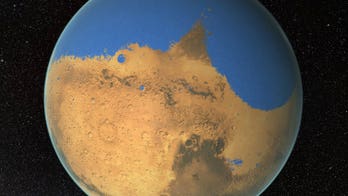
May 15, 2019 Giant hole in the Martian atmosphere is venting all its water into space There's a hole in the Martian atmosphere that opens once every two years, venting the planet's limited water supply into space — and dumping the rest of the water at the planet's poles.
May 15, 2019 These ancient galaxies are far brighter than expected. Does that signal a cosmic turning point? By staring at the sky for over 200 hours, the Spitzer Space Telescope collected light that finally reached Earth after a 13-billion-year voyage through space.
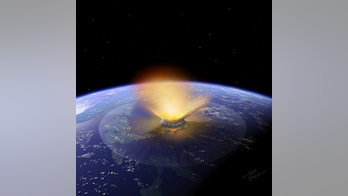
May 15, 2019 How life on Earth could come back from a sterilizing asteroid impact Supervillains take note: Even the biggest and baddest asteroids may not be 100% effective as doomsday devices.