August 13, 2019 NASA finds evidence of 'interplanetary shock' for first time NASA has captured a phenomenon in space that has eluded humanity for centuries — an "interplanetary shock."
August 13, 2019 Cause of mysterious methane spikes on Mars still unknown A few months after detecting an "unusually high" level of methane on Mars, researchers have yet to figure out what's causing the spike. They have, however, ruled out one possibility and appear to be getting closer to answering whether life exists on other planets.
August 12, 2019 Perseid meteor shower set to peak: What you need to know Stargazers are in for a treat on Monday and Tuesday when the annual Perseid meteor reaches its peak.
August 12, 2019 Asteroid the size of the Washington Monument will fly past Earth this month Just days after an asteroid the size of the Empire State Building flew past Earth, another "potentially hazardous" space rock will do the same.
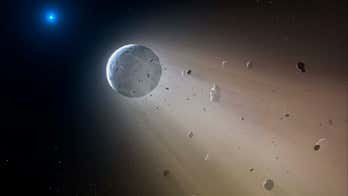
August 9, 2019 Dead planets can 'broadcast' their 'zombie signals' for almost a billion years, study says Planets that have been dead for almost a billion years may still be able to "broadcast" their signals in space, according to a new study.
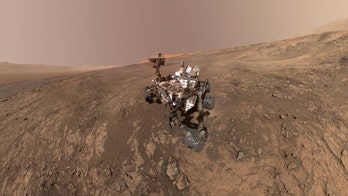
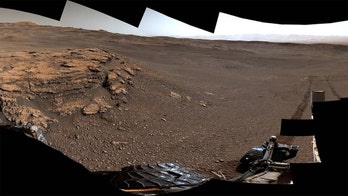
August 8, 2019 7 years on Mars, NASA Curiosity rover celebrates anniversary with new finds NASA's eventual goal is to put astronauts on Mars, but the space agency's Curiosity rover is keeping it busy in the meantime. In a new blog post, NASA said that Curiosity is still exploring the Gale Crater and uncovering the mysteries of the "clay-bearing unit," where it's using its tools to drill into the Martian soil.
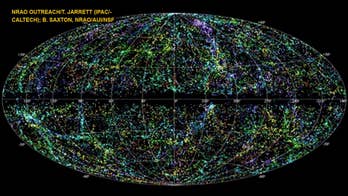
August 8, 2019 Mysterious, ancient radio signals keep pelting Earth Sudden shrieks of radio waves from deep space keep slamming into radio telescopes on Earth, spattering those instruments' detectors with confusing data. And now, astronomers are using artificial intelligence to pinpoint the source of the shrieks, in the hope of explaining what's sending them to Earth from — researchers suspect — billions of light-years across space.
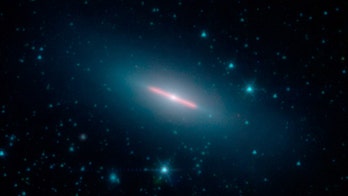
August 8, 2019 NASA spots perfectly sideways galaxy that looks like a lightsaber NASA's Spitzer Space Telescope has spotted a perfectly sideways galaxy 44 million light-years from Earth, known as NGC 5866.
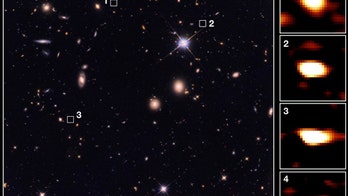
August 8, 2019 Gigantic 11 billion year-old galaxies viewed for first time ever Astronomers have spotted 39 enormous galaxies that are billions of light-years away from Earth, creating large numbers of stars the size of our Sun. They've also identified several other celestial objects previously unknown to humanity.
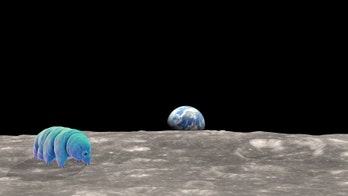
August 8, 2019 Thousands of tardigrades stranded on the Moon after lunar lander crash When you look up at the moon, there may now be a few thousand water bears looking back at you.