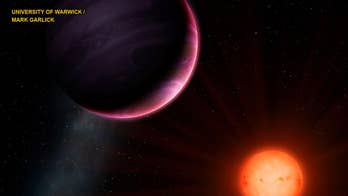
October 31, 2017 'Monster' planet discovery stuns scientists Astronomers have discovered a planet the size of Jupiter orbiting a star that’s only half the size of the sun — a celestial phenomenon that contradicts theories of planet formation.
October 31, 2017 Stunning NASA image reveals 'jack-o-lantern' Sun An incredible image released by NASA shows the Sun bearing a striking resemblance to a jack-o-lantern.
October 27, 2017 Mysterious object from deep space has entered the solar system It was first seen just a month ago.
October 26, 2017 Planet formation may be visible with next generation of radio telescopes Engineers in New Mexico are designing the next generation Very Large Array of radio telescopes to look deep into our universe.
October 24, 2017 Demand for Stephen Hawking's doctoral thesis crashes website A lot of people want to read something they'll barely understand.
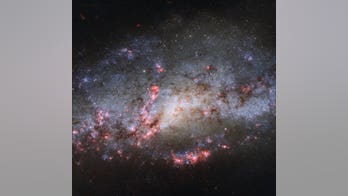
October 24, 2017 Pink clouds reveal galactic collision in new Cocoon Galaxy image The Cocoon Galaxy, once entangled with a neighboring galaxy in a violent and life-producing cosmic dance, will warp and twist again in several billions of years.
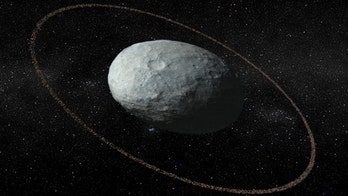
October 13, 2017 There's a giant egg floating in our solar system with a ring around it Some of the most exciting new discoveries in space come from far, far away, thanks to telescopes capable of detecting exoplanets that are so distant we'd likely never be able to actually visit them, but that doesn't mean there isn't still some pretty interesting stuff here in our own Solar System.
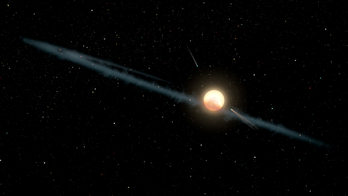
October 10, 2017 'Alien megastructure' ruled out for some of star's weird dimming There's a prosaic explanation for at least some of the weirdness of "Tabby's star," it would appear.
October 5, 2017 No life needed: Organic compound forms at comet and baby star system Organic molecules once thought to be produced only by life-forms have been found in two separate regions of space: a nearby comet and the debris around a pair of forming stars.
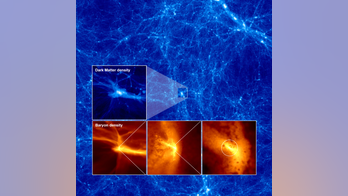
October 2, 2017 How monster black holes grew from the Big Bang's leftovers New computer simulations reveal how supersonic gas streams left over from the Big Bang could fuel some of the largest and oldest black holes in the universe.