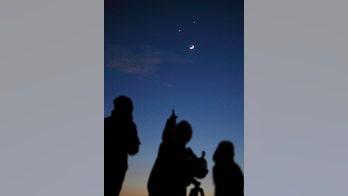
January 5, 2016 Stargazers' delight: All five visible planets set to showcase From Jan. 20 to Feb. 20, the five visible planets: Mercury, Venus, Mars, Jupiter and Saturn will be simultaneously visible in the predawn and dawn sky.
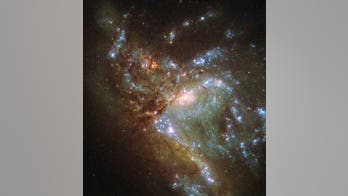
January 5, 2016 Stunning Hubble image shows two galaxies merging The Hubble space telescope has captured an incredible image of two galaxies merging.
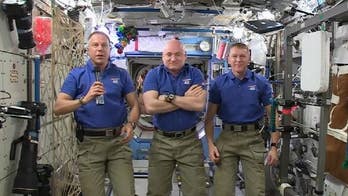
December 25, 2015 Can you hear me now? British astronaut dials wrong number from space British astronaut Tim Peake tweeted an apology on Christmas Day from the International Space Station after calling a wrong number.
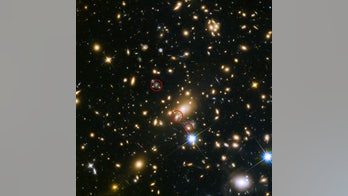
December 17, 2015 NASA's Hubble telescope spots rare exploding supernova A supernova that exploded some 10 billion years ago has been captured by Hubble Space Telescope.
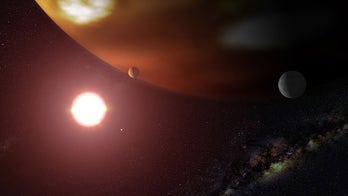
December 15, 2015 Citizen scientists name planet in global contest He’s a planet named Thestias, he resides in a galaxy far, far FAR away, and citizen scientist astronomers can add naming him to their bragging rights.
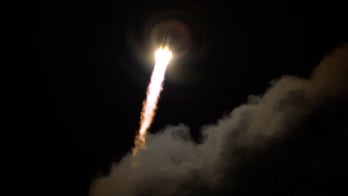
December 10, 2015 Europe launches satellite that will map 1 billion stars, hunt for new planets The European Space Agency is preparing to launch a satellite that will produce the most accurate three-dimensional map of our part of the Milky Way.
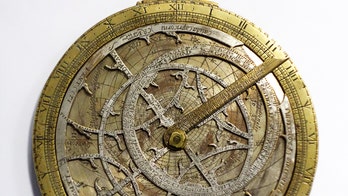
December 10, 2015 Swedish castle museum to recover missing rare astronomical astrolabe made in 1590 A rare 16th-century scientific artifact used in astronomical measurements that has been missing from a Swedish museum for a decade has been recovered and will be returned this week, the London-based Art Loss Register says.
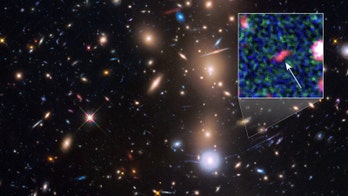
December 3, 2015 Hubble spots faintest galaxy from early universe Astronomers using NASA’s Hubble and Spitzer space telescope have found what they believe is the faintest object ever seen in the early universe, a galaxy that existed 13.8 billion years ago or about 400 million years after the big bang.
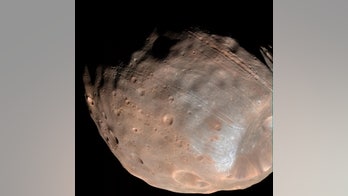
November 23, 2015 Mars will become a ringed planet when Phobos dies Mars’ doomed moon Phobos may leave its parent planet a parting gift. A new study shows the moon is likely to break apart before it hits the atmosphere, creating a debris ring that will encircle Mars for millions of years.
November 20, 2015 Stars in distant galaxies found to have a pulse This behavior has been seen in our own Milky Way but it has been difficult to document in distant galaxies. Now, a team of researchers from Harvard and Yale have for the first time show that stars that are located tens of millions of light years away have a heartbeat if you will.