Baking March 20, 2018 8 famous foods discovered by mistake Some of the greatest discoveries are made by accident and it’s no exception when it comes to food.
Kitchen Tools & Gadgets March 20, 2018 How to make McDonald’s fries at home Here’s how to replicate that irreplaceable taste at home.
Roasting March 20, 2018 America’s best chain steakhouses These casual restaurants aren’t just fun, they’re serious about steak.
Gourmet March 20, 2018 What you should know before buying olive oil Olive oil fraud is probably one of the most concerning aspects of buying olive oil to consumers today, but armed with the right knowledge, you can make smart purchases.
Healthy Foods March 20, 2018 Everything you need to know about flour All-purpose flour is called "all-purpose" for a reason — because it can be used to make everything from muffins to pizza, cakes to cookies, and quick breads to pie crust. Just because it’s all-purpose, though, doesn’t mean it’s the best choice for your baking. With lots of different varieties of flours out there, it’s no surprise that certain flours are best for certain types of baking projects. If you’re looking to fine-tune your baking skills, learning about other flours and which ones are best for certain types of baked goods can make your baking even better. When considering different types of flours, there is one very important factor that will greatly affect the outcome of your baking: the protein levels. Lower protein percentages give baked goods a more tender texture, and higher protein flours result in thicker, doughier consistencies. Most commercially available flour is made from hard winter wheat, which has a higher protein level, or soft winter wheat, which has lower levels of proteins. Understanding the wheat and protein levels of the flours you’re using to bake with will help you understand your baking better, too, and will help you get the results you desire. If you want to improve your baking, or just want to know why you should use something other than all-purpose, it’s time that you learn everything you need to know about flours. This guide will walk you through some of the most essential flours out there, and will help you to be more informed about your baking.
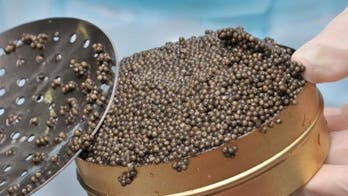
Food Trends March 20, 2018 Caviar 101: How to celebrate National Caviar Day July 18 is National Caviar Day, making this a good time to learn the basics of fine fish roes. The drama and culinary delight of caviar --known as black gold for its rarity and price point --bring an Old World elegance to any meal. Here is all you need to know to bring caviar into your home, whether your budget is copper or gold. To carry the name, Champagne must come from a specific region of France. To earn its name, caviar must come from one of three sturgeon breeds (there are 27 worldwide) from the Caspian Sea. There are great sparkling wines that are not "Champagne," and there are great fish roes that are not "caviar," but provide an enjoyable facsimile. Roe is the mass of eggs contained in the ovaries of a female fish or shellfish. Sturgeon caviars share certain flavor characteristics across the breeds (varietals); a taste of the sea similar to the juice of a perfectly fresh oyster, a taste of brine, and occasionally a metallic finish. Varietal flavors differ fish by fish and tin by tin. Each fish's diet, environment, maturity and time of harvest affect the flavor and texture of the eggs. How quickly the eggs are processed, how much salt is used, and how they are cured affect the product. Iranians, for example, use brine, while Russians stir salt in directly. Properly prepared caviar should have "enough salt so the casing can be felt on (your) tongue but with a gentle press will burst and flood your mouth with the flavor of the sea," says restaurateur Nick Peyton. True Caviars are imported, and can be wild or farmed. They are named for their Sturgeon:
TECHNIQUES March 20, 2018 What to do with barbecue leftovers For one reason or another, many of us end up with barbecue leftovers. No matter how many times you’ve thrown a barbecue in the past, you just can’t seem to get your shopping list right, and always end up with extra buns or hot dogs lying around the house. Believe it or not, those extra hamburger buns don’t have to go to waste, and that bowl of ketchup you put out doesn’t have to go in the trash. There are plenty of ways you can repurpose what’s left from your grilling party, and they don’t involve eating hot dogs and hamburgers for several days in a row. You’ll be happy to hear that hot dogs are a great addition to your breakfast, and broken chips can go further as a delicious party mix. And if there’s ever a case where you have extra beer on your hands, why not try that beer-battered recipe you’ve been eyeing? Barbecue staples are for more than just barbecues, and we’ll show you how to use the leftovers so that you don’t have to put up with the guilt of buying too much. So after the guests have gone home and the grill has been put away, try some of these fun and delicious ideas for your barbecue remnants.
Food Trends March 20, 2018 The coolest Frappuccino flavors you’ve never heard of Ah, the Frappuccino. A Starbucks commodity. A word that wasn’t even on our tongues just 20 years ago. The Starbucks Frappuccino essentially ushered in the second wave of coffee in America, with sugary sweet, frothy concoctions that consumers flocked to. And to look back on the story of Frappuccinos — and the crazy flavors made across the globe — is pretty fun. It’s hard to believe there was a time when Starbucks wasn’t ruled by Frappuccinos, but as CEO Howard Schultz explains in his book Pour Your Heart Into It, he wasn’t always a believer. Schultz writes that he resisted Southern California’s granitas trend in the 1990s because he believed the sugary, frozen drinks diluted the integrity of Starbucks’ coffee. Still, three store managers in Southern California experimented with making Frappuccinos beginning in 1994, using a powdered base (that everyone hated), and eventually using freshly brewed coffee. Eventually, the beverage director handed over the new Frappuccino recipe to a team of food consultants, who came up with a Frap made with low-fat milk. Eventually, everyone, customers and Schultz alike, saw the light — or should we say, saw the drink. The name Frappuccino actually comes from the former coffee chain The Coffee Connection, which Starbucks acquired back in 1994. (In fact, the founder of The Coffee Connection made his own cold, slushy coffee for sale, but Schultz noted that Starbucks didn’t like the drink.) Despite the hurdle of introducing Frappuccinos (and blenders) to the 550 existing Starbucks stores, the Frappuccino was immediately a hit with customers. In 1996, Schultz notes in his book, the first full fiscal year the Frappuccino was sold, Starbucks sold more than $52 million worth of the drinks. It was even named one of the best products of the year by Businessweek. What’s crazy to think is just how Schultz and the Starbucks team brought the Frappuccino to existence (Schultz writes in the book, "I was wrong, and I was delighted about it"). He writes: "Perhaps the most remarkable thing about this story is that we didn’t do any heavy-duty financial analysis on Frappuccino beforehand… No corporate bureaucracy stood in the way of the Frappuccino. It was a totally entrepreneurial project, and it flourished with a Starbucks that was no longer a small company. Even when I doubted it, it went ahead." We now know who to thank for such a drink (even if they’re, well, making it harder to fit into our summer swimsuits). Today, there are 17 Frappuccino flavors on the menu — but that’s just in the U.S. While Americans love their Caramel Frappuccinos (the number one selling Frappuccino in America), Starbucks customers across the globe have very different flavors to choose from. Most use local flavors and ingredients combined with the traditional Frappuccino coffee base that’s a staple in the Starbucks drink — and we sort of wish we could get our hands on them in the U.S. Click ahead to find the world’s most popular Frappuccino flavors, the flavors you’ve never heard of.
Food Trends March 20, 2018 What are cronuts and how do I make them at home? What could be better than a hybrid pastry of donut and croissant? The cronut, a "baked good heard round the mediasphere," according to Vogue magazine, is just that — flaky, buttery dough that's deep-fried to golden brown perfection, and then filled with cream and glazed. Since its debut in the spring of 2013, the cronut has launched into an international phenomenon, and with a dedicated following. With its burgeoning popularity, the donut-meets-croissant is in high demand — and has even found its way onto the black market. The mastermind behind the cronut craze is pastry chef and owner of Manhattan’s Domnique Ansel Bakery, Dominique Ansel, who invented the circular treat to blend his French upbringing with an American classic. Word on the street is that Ansel’s secrets include using croissant-like dough, which he then fries in grapeseed oil. The result is a light and flaky cronut that is finished in three ways: rolled in sugar, filled with cream, and topped with glaze. The cronut has become so popular that people can’t resist trying to replicate it, and news outlets and food and drink websites can't stop themselves from breathlessly covering new cronut developments every five minutes. ChicagoMag.com reports that a local Windy City bakery is serving a knockoff, dubbed the "dossant." While on the West Coast, a San Diego, Calif., bakery is dishing up an imitation of the crazy pastry, appropriately titled "cray-nut." The cronut is even going international, with "frissants" popping up in Vancouver, and Down Under, reports the The Sydney Morning Herald, with "zonuts." One Las Vegas bakery, succumbing to the hype, is simply calling their version "One of Those." Oh, and, there are the people who think they’re the ones who created it to begin with, like one drama-loving soap opera-actress-turned-cook in Texas. As you may have guessed, we tried replicating it, too. Although Ansel and the rest of the bakery’s team are keeping mum on the coveted recipe, we got the inside scoop from a professional pastry chef who used to work for Ansel — before he created the cronut — on how to make croissant dough at home. Her keys to cronut success include, "Keeping the dough chilled, otherwise you’ll have a buttery mess on your hands." Also, "When initially mixing the dough, resist the urge to overmix. Just mix until the dough is a consistent texture." Although the process seems laborious, she says,"This dough is easier to make at home than most [people] expect." We were up for the challenge and based our recipe on classic croissant dough. Taken from what we know about the original cronut recipe, we fried in ours in grapeseed oil and finished it by giving it a dusting of sugar, filling it with cream, and topping with glaze. While Ansel’s version takes a lengthy three days to complete, we’ve skillfully compressed it down to one — if you start early! So while cronut-craving tourists and New Yorkers are lining up, hundreds-deep, to get their hands on one, you’ll have no problem scoring the elusive pastry with our recipe at home — that we think just might rival the original.
CUISINES March 20, 2018 The ultimate BBQ road trip for 2013 What’s almost as difficult as creating an itinerary for the South’s essential barbecue stops is knowing how to spell the name of the dish itself. Depending on your location, you might come across crucial orthographic nuances like barbecue, barbacue, barbeque, BBQ, B-B-Q, Bar-B-Q, and even Bar-B-Que. To be clear, though, we can understand the staple as the slow cooking, and (very often) smoking, of meat. Styles, like spelling, are distinct depending on the regional preference. "Barbecue" the verb means the process of roasting with indirect heat. The technique can often be used in the preparation of lamb, turkey, and chicken, but cuts of beef and pork generally make up the dominant styles.  Different styles also incorporate different garnishes, with some being as simple as a salt and pepper dry rub, while others are a complex mix of tradition and a particular pitmaster’s choosing. After the meat is sliced, chopped, or shredded, sauces (which can also play a role in the cooking process) can be applied and range in viscosity and ingredients. Whether it should be vinegar-based, tomato-based, mustard-based, or even mayonnaise-based is a perpetual argument that’s most likely to sway depending on where one is. Barbecue (apologies to regional spelling purists) is more popular than ever on a national scale, which makes finding an abiding restaurant, cart, or food truck in most corners of the country not uncommon. For our purposes, though, we chose to focus on the South, since, quite simply, it’s where our country’s barbecue tradition takes root. Here more than anywhere else, it is a form of identity instead of a timely interest. Our comprehensive road trip begins in Virginia and the Carolinas where whole-hog pulled pork reigns. As you count down the miles from start to finish, expect the meat (for the most part, except for several creative variations developed by some of the newcomers) to be dressed in either a vinegar-, tomato-, or mustard-based sauce. If not served on a simple white bun, then it's probably on a platter with baked beans, mayonnaise-based coleslaw, the occasional hushpuppy, and a tall cold glass of iced tea. Part two stretches from the deep South up into the Midwest to take us through what is traditionally beef brisket, sausage, and rib territory. Whether they're serving out of a repurposed market, off a back porch, or even out of a trailer, the majority of these legendary joints forgo the frills to offer simply delicious smoked and/or grilled meat garnished in a range of rubs and sauces. Along with simple and common sides of crackers, beans, white bread, and pickles, meats vary along this route, with barbecued poultry and lamb sometimes finding a spot on the menu. Our last leg covers the heart of the southeast. Across seven states, expect to find some of the country's best brisket, pulled pork, sausages, ribs, and even gator. Pits along this 2,253-mile route range from family-owned franchises to modest dining rooms with concrete floors and wooden tables. You're likely to find a variety of traditional rubs and sauces, including Alabama's white sauce, a mayonnaise-based condiment that's most often used to dress barbecue chicken. To honor the diversity of barbecue culture, the stops on our road trip are unranked. Instead, our map is meant to highlight local landmarks that both honor the culinary tradition as well as think creatively about the future of this Southern staple. You say BBQ, I say barbecue — it’s simply a matter of personal taste.  This year’s road trip takes us to even more essential barbecue joints than last year, while also branching out to include an entire additional leg. Along with stops from last year’s lineup, we collected reader, staff, and regional expert recommendations to cover 5,120 miles (that’s almost twice the length of I-40) over 16 states. Building again on last year, the 60 restaurants listed were in part provided by the recommendations of informed chefs, pitmasters, and barbecue experts (there is a culture), as well as the broad knowledge of the Southern Foodways Alliance, a University of Mississippi-based nonprofit that seeks to study and document Southern foodways.
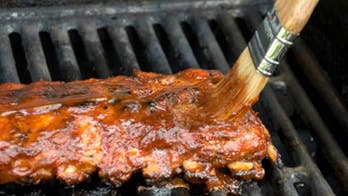
Food Trends March 20, 2018 How to make a great rack of ribs If there’s one thing that we definitely don’t mind licking our fingers for, it’s ribs. Juicy, succulent, and downright messy, ribs are one of the few dishes in life that we’re happy to pull apart with our bare hands and bite into right off the bone.  So what makes a rack of ribs so good? Sure, there are marinades you can use and special rubs to try, but no matter what flavor combination you’d like your ribs to have, there’s a set of standard rules to apply when making ribs that can take them from being just a good rack of ribs, to a great one — and we’ll show you how. Erin Coopey, chef and author of The Kitchen Pantry Cookbook, never starts cooking her ribs without tending to the silver skin, and she has some pretty firm beliefs about how to avoid a charred, bitter crust, too. If you were to ask barbecue master Melissa Cookston, co-owner of Memphis BBQ Company and a judge on Destination America’s BBQ Pitmasters, she’d tell you to never make ribs without smoking them, and our friend Clint Cantwell of Grilling.com has some pretty sound advice about how to sauce ribs, too. There are a bunch of guidelines for making ribs that are simple in nature but when applied, make a world of difference, so don’t miss out on reading them before you get your ribs out. And once you have the method complete, we’ve got some recipes for you to try. There’s Coopey’s "never fail" baby back rib recipe, which uses a handful of spices and the low-and-slow method to cook a rack, and there are Canal House’s ribs, that are doused in a hoisin sauce that is so good, it’s hoi-sinful. There’s even one that brings us back to our college years, created by the liquor connoisseurs at Jägermeister, who enlist their rich, syrupy liquor to create a rib sauce that has true depth of flavor. These helpful tips and recipes will take your rack of ribs from being just a good one to a finger-licking great one. Oh, and, don’t forget the wet naps.