Ó£ÌÒÊÓÆµ

Food Prep - Page 37

9 creative uses for jelly beans

9 creative uses for jelly beans

We’ve been busying ourselves with Easter prep these past few weeks, from searching for the prettiest decorated eggs, the best egg cups, and the perfect deviled egg recipe to hunting for the best basket treats around.Amid the talk of eggs and chocolate bunnies, we’ve neglected a huge Easter icon — the jelly bean. Ah, yes, the sweet, sour, and sometimes insanely sugary bite-sized candies that fill your dessert bars and party favor bags and are often the "treasure" in your plastic Easter eggs. With flavors like buttered popcorn, piña colada, toasted marshmallow, tutti-frutti, and others, you can imagine how bright a scene just one bowl of jelly beans creates. However, some flavors aren’t so stellar — who can forget Harry Potter’s famous Bertie Bott's Every Flavour Beans, a brand that’s now owned by Jelly Belly and whose flavors consist of vomit, booger, earwax, sausage, and rotten egg as well as a few other delectable options. Technically a dragée — a sweet that has a hard outer shell — a jelly bean, though delicious, can be used for just more than satisfying your sweet tooth fix. They can sit atop cakes, decorate tables, and sometimes, just sometimes, pose as jewelry. While we can’t force you to actually eat them, we can urge you to step into spring with us and use the colorful confections to create a fun and inviting atmosphere. Take a nod from some of these creative and original ways to use jelly beans in your Easter and spring party planning.

Busting the most common kitchen myths
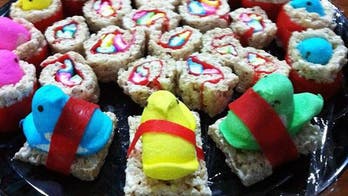
8 ways to reincarnate a Peep
How to make a better meatball
Celebrity Chefs March 20, 2018

How to make a better meatball

Some things just never get old, especially when it comes to food. Traditional dishes — ones like dips and apple pies — hold a special place in many people’s hearts because of their consistently satisfying flavors and the memories they conjure. Whether it’s a recipe that we learned from our grandmother or a dish that represents a significant event in our lives, food has a way of crawling up inside our hearts and staying there forever. For many, this sentiment can be applied to a hot, heaping plate of spaghetti and meatballs. Does anyone remember when Lady and the Tramp locked lips over it during a romantic, back-alleyway dinner? Or could you imagine an elegant meal at a red-and-white-checkered-table Italian restaurant without seeing it on the menu? Whether because of family, childhood movies, or just simply America’s overwhelming love for it, spaghetti and meatballs is a dish that will just never get old and never go away. Ask any Italian about the rustic, home-style dish, though, and they’d tell you that it all starts with the meatballs, and the spaghetti is just an afterthought. Traditionally, the two were never supposed to be served together, but over time, and especially in America, they joined hands and are rarely seen without each other (at least in the respect that we discuss them here). Because anyone could boil water for pasta, we chose to zone in on this timeless dish by determining how to make a better meatball. For help, we turned to Italian chef Michael Lomonaco to give us some pointers. While he doesn't serve Italian food at his New York City restaurants Porter House New York and Center Bar, he knows a thing or two about the region’s cooking. Lomonaco grew up in Brooklyn, N.Y., with two Sicilian-immigrant parents, and he spent most of his life making and eating authentic Italian food. And along with Lomonaco’s key words of wisdom, some other friends in the industry, like Michael Psilakis and Marc Vetri, impart their meatball knowledge and share their recipes with us as well. Recipes for a classic meatball will inevitably change over time; but the idea of one will never die in our hearts as food lovers. Live by these meatball-making rules given to us from the experts and you’ll make a better meatball, no matter what kind, every time.

Ridiculous kitchen gadgets that you don’t need

Ridiculous kitchen gadgets that you don’t need

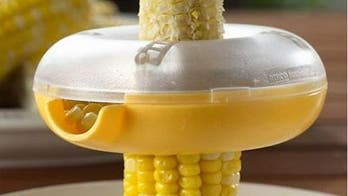
Let’s face it — the kitchen can be an expensive place. With cookware, knife sets, and everything in between, stocking a kitchen can add up to a lot of money. Because it can be challenging to discern the difference between something you need and something you want, we often see experts in the industry doling out advice with lists of what’s worth splurging on and what you really don’t need in order to relieve you of stress and keep your kitchen as budget-friendly as it can be. This is not one of those lists. This list is a collection of kitchen tools and gadgets that aren’t necessary for you to have — and in some cases are just absurd — but we secretly really want them, and that’s why we’re telling you about them today. From grill gadgets and egg molds to cookie cutters and corn kernelers, these gadgets are what we would classify as ridiculous, but if money was no object in this world, we’d recommend that you buy them. If you’re a grilling fanatic, you’ll probably want to get your hands on a Two Way Hold Magnetic Grill Light and a Flameless Grill Smoker. Can’t practice your perfect bacon-egg-and-cheese sandwich skills during the week? Hamilton Beach’s Breakfast Sandwich Maker is the perfect compromise for you when you’re short on time and late for work. There’s even more stuff for the egg fanatics, like a plucker that will make creating egg whites a snap and a nifty little tool that will add some much needed sunshine to your weekday morning. Don’t get us wrong, just because we’re calling these products silly doesn’t mean we don't think they’re great. They’re all fun toys and gadgets that we’d certainly spend our money on, but would you?

How to make the perfect potato chip
Food Prep March 20, 2018

How to make the perfect potato chip

Is there anything better than a crunchy, salty potato chip? Created in 1853 in Saratoga Springs, N.Y., potato chips were originally meant to be a prank in response to a surly customer complaining about his potato fries being "too thick," but their thin, crisp qualities turned out to be something very different than a joke. "Saratoga chips" instantly became a hit, and their popularity traveled from upstate New York to all around the country. By the 1920s they had become a well-known and popular snack, and potato chip manufacturing companies starting popping up everywhere in the culinary industry. On March 14, America celebrates potato chips and all of their glory through National Potato Chip Day. The widely distributed chip is one of America's favorite snacks, and with so many brands and varieties available, potato chips continue to be one of the most popular food items that you can buy. And while you can walk into any convenience store, gas station, or supermarket and pick up a bag, the Cook editors here believe that there's nothing more gratifying than making your own at home. While potato chips seem like a simple fry-job, they’re actually quite a complex kitchen project. The potato is a mysterious creature, made up of starches and carbohydrates that make the alchemy of cooking one a tricky task. While something like mashing boiled potatoes can be an easy feat, frying them sliced and getting the perfect consistency and just the right balance of oil is something that can only be done with the knowledge and understanding of a potato. To help us discover how to make the perfect potato chip, we turned to molecular gastronomy guru Dave Arnold to help us develop a recipe. As the director of culinary technology at the International Culinary Center, Arnold leads the way in developing groundbreaking technologies and techniques in the world of cooking. The award-winning food writer and culinary science-whiz took some time out of his busy schedule to discuss the genetics of a potato with us to help us achieve creating the ultimate potato chip, and it all came down to water and sugar. "[The main goal of making a potato chip is] getting all of the water out of it so that it becomes crispy but at the same time mains its structure," he explained. He added that, along with the structure, the color of your potato chip is important, and this is highly affected by the amount of sugar found in potatoes. With these two things in mind, Arnold let us in on a few secrets for how to cook a potato chip perfectly and maintain its perfect brown-blonde exterior. While the structure of a potato chip is complex, the recipe is simple, and as long as you keep the underlying principles that Arnold explains to us in mind, you’ll get a perfect potato chip, every time.  

NASA’s top 10 tips for eating in space